

Redwood Coast K16 Collaborative leaves lasting pathways for rural students as grant draws to a close


As the Redwood Coast K16 Collaborative drew to a close on June 30, Sonoma State University and its regional partners marked the end of a grant-funded effort that expanded college and career pathways for students across Lake and Mendocino counties — and established relationships and infrastructure that will endure and continue to serve the region in years to come.
Over the past four years, the Collaborative helped secure more than $8.2 million in Golden State Pathways funding for local districts, supported the growth of a summer dual enrollment program from 12 students to roughly 400, and advanced new healthcare and education career pathways in one of California’s most geographically isolated and historically underserved regions.
In Mendocino County, geography shapes nearly every part of educational access. North-south mountain ranges divide communities. Few roads connect inland areas to the coast, leaving coastal communities particularly isolated. Reaching Lake County requires crossing a mountain range regardless of the route. In northwestern Mendocino County, Whale Gulch School, the smallest (13 students) school in Sonoma State’s service area, is about a 90-minute drive from Highway 101.
Those distances have long affected how students access higher education, for example, whether they can take early college courses and how easily schools and higher education partners can coordinate services. The grant period is ending, but partners say the work it helped build will continue through sustained relationships among K-12 districts, Mendocino College, Sonoma State, county offices of education, and regional employers; expanded access to early college credit; and clearer pathways into high-need fields such as healthcare and education.
“When we conceived the ideas supporting the grant, we envisioned providing access to communities that would not otherwise be able to access the campus and our programs. We wanted to make sure there was no excuse for children to not be able to tour our campus,” said Dr. Laura Alamillo, dean of the College of Education, Counseling, and Ethnic Studies at Sonoma State University.
A key objective of the program, Alamillo said, was providing rural students with “access to careers in education. Our teacher residencies and dual enrollment opportunities reflect this success.”
One of the Collaborative’s most visible outcomes has been the growth of Mendocino College’s six-week summer dual enrollment program. Six years ago, the program served 12 students. This year, it served nearly 400 — approximately 10 percent of the total student population in these rural counties.
For many students, access required more than simply enrolling in a course. Some traveled more than 60 miles and 90 minutes each way to participate. Mendocino College’s satellite facilities in Fort Bragg, Willits, and Lakeport are major resources for the region, but even those locations can be a long drive for students and families spread across remote communities.
To make the summer dual enrollment program possible, partners hired vans in each participating school district to transport students. Meals and completion stipends helped address additional practical barriers that can limit access to college-level coursework in rural communities.
The program’s growth reflects a broader regional effort to help students earn college credit, build confidence in post secondary settings, and begin exploring career pathways while still in high school.
“For students whose communities are separated from college campuses by mountain roads, long drives, and limited transportation options, the program created a more reliable bridge to an early college experience,” said Jennifer Delgadillo Bevington, the Collaborative’s co-director.
That work is now extending into healthcare. This year, Sonoma State launched KIN 150: Introduction to Careers in Healthcare, the university’s first healthcare-focused dual enrollment course, in partnership with Round Valley High School and Ukiah Unified School District; the course is scheduled for implementation beginning in spring 2027.
The Collaborative also convened a regional Curriculum Integration Institute, bringing educators together across systems to develop a year-long, healthcare-themed English Language Arts course for the statewide UC Curriculum Integration library. The course is designed to help students connect core academic learning with healthcare-related themes and career exploration.
Building healthcare and education pathways
Healthcare access and workforce shortages remain significant issues in rural parts of the North Coast. Through the Collaborative, regional partners worked to better connect students with healthcare career exploration, training opportunities, and future post secondary pathways.
The K16-sponsored Healthcare Summit helped lead to the development of the Health Education and Regional Training (HEART) Hub, a regional healthcare simulation and education initiative that brings together K-12, community college, university, and healthcare partners around shared workforce goals.
A related Healthcare Career Academy, funded through the California Department of Health Care Access and Information, will launch in late July 2026 for high school students from health professional shortage areas. The academy filled with 100 students almost immediately, indicating strong student interest in healthcare careers and a need for additional entry points into the field.
The Collaborative also contributed to regional teacher preparation efforts. Built on the strength of Sonoma State’s Liberal Studies program at Mendocino College, and led by professors Rhia Casesa and Paula Lane, the work supports a “grow your own” approach to teacher recruitment. Rural districts in Lake and Mendocino counties that have struggled to recruit credentialed teachers are beginning to hire educators trained locally, creating a pathway for residents to prepare for teaching careers in their own communities.
Trust as infrastructure
In some communities, the Collaborative’s impact has been shaped as much by relationships as by formal
programs.
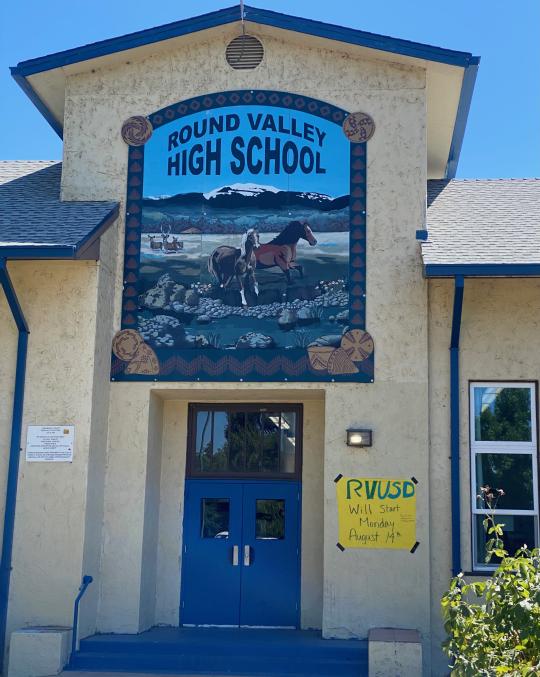
At Round Valley High School, where roughly 60 percent of students are Native American, K16 Pathway Advisor Otaka Redhawk has worked with students and families through academic advising, college and career planning, mental health referrals, and culturally responsive programming, including Talking Circles.
That sustained, community-based work has helped students and adult learners navigate college and career options in a setting where distance, past experiences with institutions, and family responsibilities can all shape educational decisions.
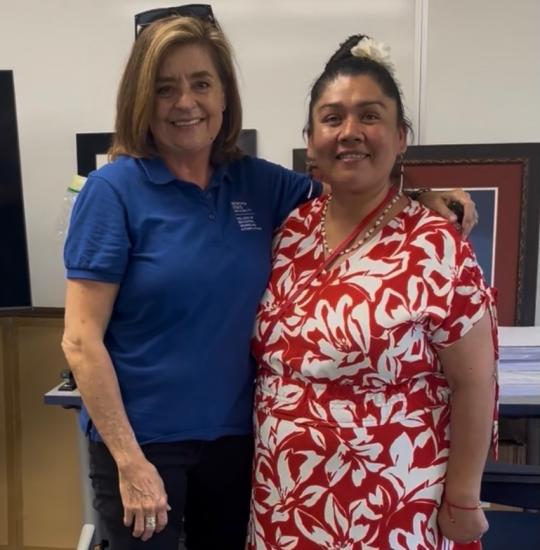
Through Redhawk’s efforts, a cohort of local women — many of whom had been hesitant to return to school — enrolled in college coursework as a first step toward future teacher residency programs. Their participation reflects one of the Collaborative’s central goals: creating pathways accessible to local residents and responsive to local workforce needs.
The same relationship-building also helped expand students’ exposure to colleges beyond the immediate region. Through partnerships with TRiO programs, students from remote communities were able to take college visits and trips to campuses across California.
Redhawk described her role as one of “connecting the dots of the resources available from SSU for our high school students and also the adults who are in the residency programs.”
“This kind of collaborative work takes a different muscle; you can only move as fast as you build relationships,” said Bevington. “We didn't move at the speed of funding cycles, academic years, or deadlines. We moved at the speed of trust. That's what has made this work authentic and what will make all of our efforts last.”
Systems built to continue
Several of the Collaborative’s investments were designed to remain in place after the grant period ends.
The Collaborative supported district adoption of the California College Guidance Initiative by providing $20,000 in implementation stipends for the data integration work required to connect students with statewide college and career planning tools. Once completed, that infrastructure remains available to students and districts beyond the grant.
A new multi-county internship model, Path to Purpose – developed by the CTE Foundation in partnership with the Lake County Office of Education – is also intended to continue after June 30. The model is designed to simplify employer participation in work-based learning and expand student access to internships and career-related experiences.
Together, these efforts created a stronger framework for connecting high school students to college credit, career exploration, work-based learning, and post secondary programs. In a region where roads, distance, and terrain can limit access, that framework depends not only on programs, but also on the transportation plans, advising relationships, data systems, and cross-institutional coordination that make participation possible.
A regional partnership moving forward
Although the Redwood Coast K16 Collaborative’s grant period is ending, the pathways it helped establish are expected to continue through existing programs, institutional partnerships, fundraising, and ongoing regional workforce efforts.
For Sonoma State and its partners, the work represents a foundation for continued collaboration across Lake and Mendocino counties.
The Collaborative put in place expanded dual enrollment access, emerging healthcare and teacher preparation pathways, new internship infrastructure, and deeper relationships among the institutions serving the region. Those relationships, along with the practical systems built to move students across distance and into opportunity, will be central to sustaining the work and adapting it for future generations of students across the Redwood Coast.